
Crack & Water-Damage Correction Contractors In New York
Request An Estimate

About Our Crack & Water-Damage Correction Services
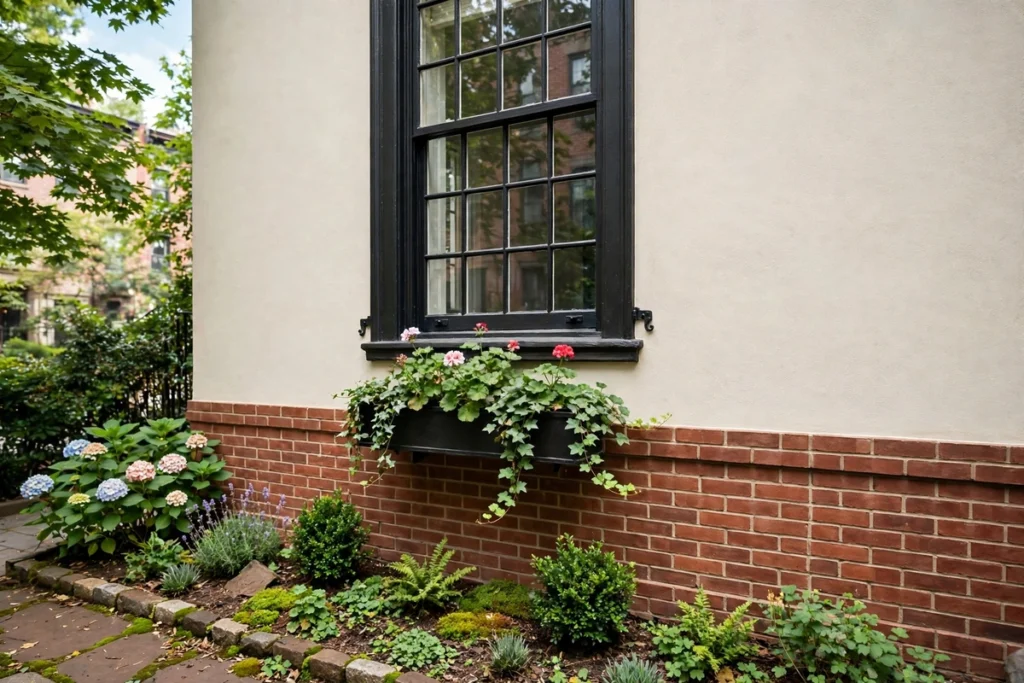
The correction discipline starts with the water path, because damage appears away from its entry. Water enters where a brick or stucco wall is interrupted or finished — open joints, sills and window heads, flashing at changes of plane, parapet junctions, unsealed penetrations — then travels: down inside stucco coats that still look smooth, through saturated brick units that split a winter later, along paths that deliver the stain to a wall or ceiling with no opening anywhere near it. So the survey works up and across from the damage before anything is opened: crack pattern, width, location and history read as evidence — hairline curing cracks tell one story, recurring cracks another, cracks travelling with stains a third — and the entry points above and beside the damage checked in the order water would use them.
Correction then runs in the envelope’s own sequence. The entry is corrected first — the joint, sill, head or flashing detail that belongs to the brick and stucco scope, renewed or rebuilt. The damaged material is opened second, to sound substrate: water-damaged stucco coats, saturated and split brick units, failed lath or backing as found, with each stage’s findings reported in writing — an opened wall may change the scope openly, never silently. Rebuilding comes last. Where the diagnosis lands on a neighbouring scope, this page routes rather than absorbs: a crack whose real scope is the brickwork itself is carried at depth on our brick crack repair and replacement page, failed units are replaced under our brick repair and replacement scope, and joint renewal runs through our brick pointing discipline — each named as its own line.
What Is Crack & Water-Damage Correction?
Correction is a sequence, not a product. A crack repair fills a crack; a water-damage repair dries a stain; correction asks the prior questions — what made this crack, where is this water entering, how far has it travelled behind the surface — and refuses to rebuild anything until they are answered. The four steps are fixed: diagnose the pattern and trace the path, correct the entry, open the damage to sound material, rebuild. Skipping to the last step is the definition of the failed repair most owners have already paid for once: the filled crack that reopens wider, the repainted stain that blooms back through.
It is also a routing discipline, because a crack is a symptom shared by several crafts. The same stepped crack can be a water story, a movement story or a brickwork story, and each belongs to a different scope. Correction is the page that reads the symptom across both of this family’s materials — brick and stucco — decides which story yours is, and puts the right scope on it, including saying plainly when a pattern points to movement that needs an engineer’s determination before any contractor’s repair.
- Our Services
Types Of Services We Offer

Crack & Water-Damage Correction
The family's diagnosis hub: crack patterns read, water paths traced, entries corrected and damaged brick or stucco rebuilt — in that order, under one written scope.

Crack Pattern Diagnosis
Pattern, width, location and recurrence read as evidence — curing hairline, movement, substrate failure and water travel each tell a different story and earn a different scope.

Water-Path Tracing & Entry Correction
The stain followed back up its path to the joint, sill, head or flashing that admitted the water — and that entry corrected before anything is rebuilt.

Opening-Up To Sound Material
Damaged coats and units opened where the evidence points, until sound, bonded, dry material is reached — findings reported in writing as they emerge.

Brick Substrate Correction
Saturated, split and salt-damaged brickwork corrected at the depth the water reached — failed units out, sound courses kept, the wall's drying path restored.

Stucco Substrate Correction
Stained, soft and hollow stucco opened to its substrate or lath, water-damaged layers removed and the coats rebuilt over sound material.

Brick Crack Repair & Replacement
Where the diagnosis lands on a crack scope in the brickwork itself — cause, stitching, crack-led course replacement — that craft depth lives on our masonry crack page.

Drywall & Plaster Repair — The Interior Side
This page corrects the exterior cause first; the stained or softened wall inside your home is then made good once, under our drywall and plaster scope.
Searching for Crack & Water-Damage Correction Contractors Near Me?
If you are searching for crack or water-damage repair near you in New York, the useful question is who traces the water before opening the wall — and who corrects the entry before rebuilding the damage. RT General Construction Inc is based in Yonkers and corrects brick and stucco water damage across Westchester County, the Bronx, Manhattan and Queens — houses, pre-war buildings and small-to-mid blocks, where the owner deals with one contractor for the diagnosis, the written scope and the work itself. Every correction is assessed in person, the entry points mapped before any opening, and findings on opening reported in writing as they are found. This page corrects the exterior cause and the exterior substrate; where the water has also marked the rooms inside, that making-good is a separate interior scope, carried on our drywall and plaster repair page and sequenced after the leak is dead. Call us or send the form on this page to arrange a free estimate at your property.
- Why Choose Us
The Entry Corrected First — The Wall Rebuilt Second
- Crack Patterns Read As Evidence
- Water Traced To Its Actual Entry
- Entry Before Rebuild, Always
- Openings Decided By Sounding And Stains
- Findings Reported In Writing, As Found
- Neighbouring Scopes Routed, Not Absorbed
A Recurring Crack Is A Diagnosis
The Interior Wall Waits For The Leak To Die
Movement Is Named, Not Filled
- Our Process
Process, How we Works.
01
Cracks That Keep Coming Back
A crack that reopens after filling is reporting an untouched cause — active water travel or continuing movement. Each cosmetic round returns wider; the cause is the repair.
02
Stains That Grow After Rain
A stain with a weather rhythm has a live entry point feeding it. Until the entry is found and corrected, every interior finish over it is temporary.
03
White Salts Blooming On Brick Or Stucco
Efflorescence is water evaporating through the wall and leaving its minerals on the face — visible proof that moisture is travelling through the material, not just across it.
04
Soft, Hollow Or Bulging Areas
Substrate and coats damaged behind a surface that may still look sound. This is where water has been longest, and where opening to sound material matters most.
- Benefits
Benefits Of Hiring Us In New York
Correction is bought once or bought repeatedly — the difference is sequence. Here is what the diagnose-first order gets you.
The Entry Corrected Before The Damage
Water is stopped at its source before any rebuilding begins, so the new work is never laid over the cause of the old failure.
Both Substrates, One Diagnosis
Brick and stucco carry water differently, and many facades carry both. The path is traced across the whole wall, not stopped at a material boundary.
Openings Decided By Evidence
Walls are opened where sounding, stains and soft areas point — to sound material, no further — and findings are reported in writing as they emerge.
Routed Honestly, Not Absorbed
Where your crack belongs to a brickwork, pointing or interior scope, that is the scope you are sold — this page diagnoses across its neighbours and hands over cleanly.
- Our Projects
Proven Quality, Best Results

- Testimonials
Built on Trust, Proven By Testimonials
98% Clients Are Positive Reviews 1 2


 Trustindex verifies that the original source of the review is Google.
 Trustindex verifies that the original source of the review is Google.
 Trustindex verifies that the original source of the review is Google.
 Trustindex verifies that the original source of the review is Google.
- Our Faq
Clear Answers to Your Construction Questions
What Does Crack And Water-Damage Correction Cost In New York?
Cost turns on how far the water has travelled behind the surface — which the visible stain understates almost every time — the state of the substrate, lath or units found once the damage is opened, the entry-point correction scope the tracing identifies, and the rebuild area with its finish matching. A correction is priced on the route the water took, not the size of the mark it left. We assess in person, map the entry points into the written scope, and report findings on opening before the rebuild is priced as final.
Why Does The Same Crack Keep Coming Back After Repair?
Because a filled crack is a symptom treated, not a cause corrected. If water is still travelling to that spot, it re-wets the repair, freezes in it and splits it wider; if the wall is still moving, a rigid fill simply tears again along the same line. Recurrence is diagnostic information: it tells you the first repair never reached the cause. Correction starts there — the entry corrected or the movement read honestly, including saying when a pattern needs an engineer’s determination — before anything is filled again.
Water Is Staining My Wall But I Cannot See A Crack — Where Is It Getting In?
Usually not through a crack at all. Stucco is porous and drinks at hairline openings, unsealed penetrations and failed joints around windows and fixtures; brick walls admit water through open mortar joints, failed sills and window heads, and flashing that has given up at a change of plane. From any of those entries, water travels inside the wall and appears where the path ends — often a room away. The survey follows the stain back up its path to the entry, which is why correction begins with tracing, not opening.
How Far Will You Open My Wall, And How Is That Decided?
As far as the evidence points, and no further. Sounding for hollow areas, reading stains and soft spots, and checking the material at the damage’s edges decide the boundary: opening continues until sound, bonded, dry material is reached, because rebuilding over damaged substrate rebuilds the failure. What the opening finds — lath state, substrate condition, how far saturation travelled — is reported to you in writing as found, and the scope is adjusted openly at that point rather than discovered by you later.
Does This Include Repairing The Stained Wall Inside My Home?
No — and the separation protects your interior repair. This page corrects the exterior cause and the exterior substrate: the entry point, the damaged brick or stucco, the wall’s outside layers. Stained, softened or damaged drywall and plaster inside the building is its own scope, carried on our drywall and plaster repair page. The sequence matters: interior making-good is done after the exterior entry is corrected and the wall has dried, so the inside wall is repaired once, not once per rainy season.
- Services Areas
Proudly Serving Across New York
From interior renovations to exterior restoration, RT General Construction Inc delivers dependable construction and remodeling solutions for residential and commercial properties across New York. Our team handles everything from masonry, concrete, roofing, and exterior repairs to kitchens, bathrooms, painting, and interior improvements.
- New York
- Jerome Park, NY
- Village of Pelham, NY
- Harlem, NY
- Eastchester, NY
- North Side, NY
- Yonkers, NY
- New Rochelle, NY
- Pelham Manor, NY
- Mamaroneck, NY
- Larchmont, NY
- Tuckahoe, NY
- Hastings-on-Hudson, NY
- Scarsdale, NY
- Bronxville, NY
- White Plains, NY
- Manhattan, NY
- Astoria, NY
- Long Island City, NY
- Fresh Meadows, NY
- Flushing, NY
- Bayside, NY
- Queens, NY
Let's Build Something Amazing Together
Tell us about your project and we will arrange an assessment, explain what the work involves and provide a written scope before anything begins. One contractor, one plan, one accountable team — that is how RT General Construction Inc runs every job, large or small.